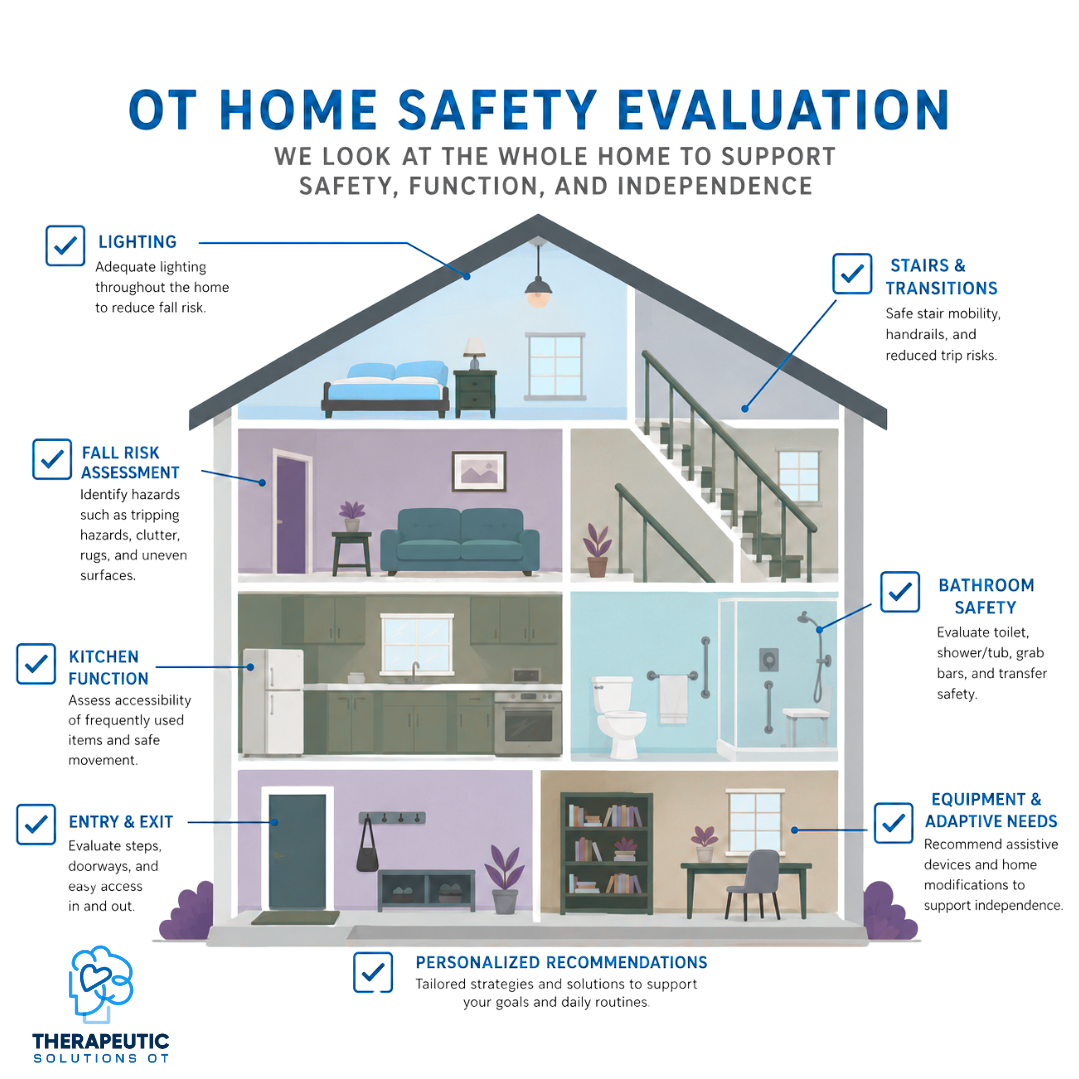
A home safety evaluation is a personalized assessment of an individual's living environment with consideration for their daily routines and functional abilities. The goal is to identify potential safety concerns and recommend practical solutions that support independence at home.
During a home safety evaluation, an occupational therapist can assess:
• Overall fall risks throughout the home• Use of mobility devices, such as walkers, canes, and wheelchairs
• Entryways, thresholds, and other potential tripping hazards
• Bathroom safety, including shower/tub access and toilet transfers
• Kitchen safety and meal preparation, including accessibility of frequently used items, appliance use, and safe movement throughout the kitchen
• Bedroom setup and nighttime bathroom access
• Dressing, grooming, and personal care activities, including the need for adaptive equipment and compensatory strategies
• Stair navigation and mobility throughout the home
• Lighting, visibility, and nighttime safety
Recommendations are tailored to each person's unique needs and may include home modifications, equipment suggestions, environmental changes, and caregiver education.
Whether you're planning ahead, returning home after a hospitalization, or supporting a loved one, a home safety evaluation can help create a safer and more accessible living environment.