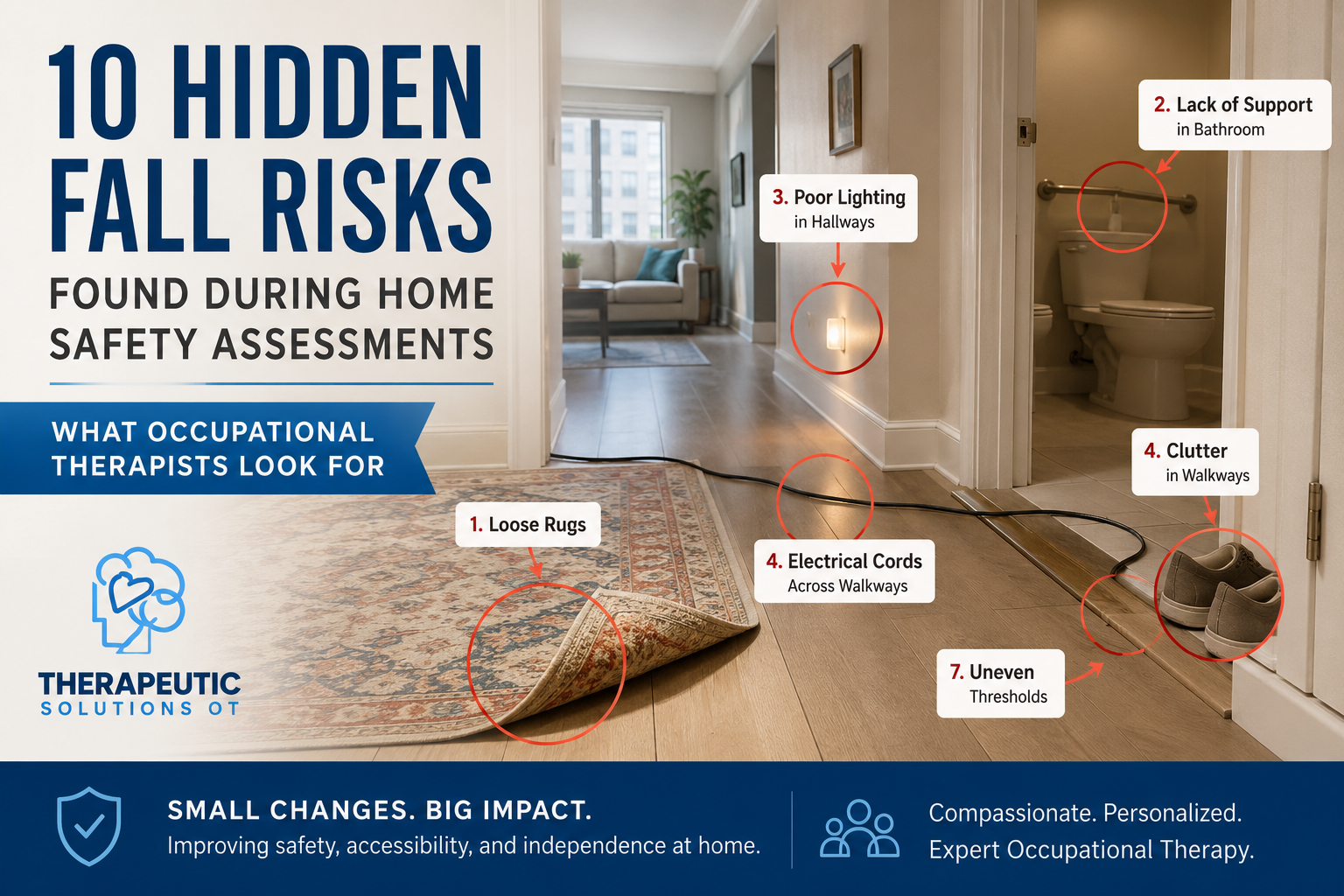
Falls are one of the leading causes of injury among older adults, yet many hazards remain hidden in plain sight. During home safety assessments throughout New York City, occupational therapists frequently identify environmental risks that homeowners and families may not recognize until an injury occurs.
The good news is that many of these hazards can be addressed through simple modifications, equipment recommendations, and environmental changes.
1. Area Rugs and Loose Floor Mats
The Issue:
Area rugs and floor mats can slide, curl at the edges, or bunch underfoot, creating significant tripping hazards.
What the Occupational Therapists at Therapeutic Solutions OT Recommend:
Remove unnecessary rugs
Install non-slip rug backing
Secure rug edges with appropriate tape or fasteners
2. Bathroom Entry and Tub Transfers
The Issue:
Stepping into and out of a bathtub requires balance, strength, and coordination. Wet surfaces further increase the risk of slipping.
What the Occupational Therapists at Therapeutic Solutions OT Recommend:
Install grab bars
Use a tub transfer bench or shower chair
Consider a handheld showerhead
Improve bathroom layout for safer access
3. Poor Lighting
The Issue:
Dim hallways, bedrooms, and bathrooms can make it difficult to identify changes in flooring, clutter, thresholds, and other obstacles.
What the Occupational Therapists at Therapeutic Solutions OT Recommend:
Install nightlights
Add LED lighting to pathways and walkways
Use motion-activated lighting
Utilize smart-home lighting systems for easier control
4. Cluttered Pathways and Obstacles
The Issue:
Storage bins, electrical cords, pet supplies, and shoes can obstruct walking paths and increase fall risk.
What the Occupational Therapists at Therapeutic Solutions OT Recommend:
Maintain clear walking pathways
Organize frequently used items
Secure or reroute electrical cords
Reduce unnecessary clutter in high-traffic areas
5. Furniture Used for Support
The Issue:
Many individuals rely on furniture for balance while walking. Furniture can shift unexpectedly and may not provide adequate support.
What the Occupational Therapists at Therapeutic Solutions OT Recommend:
Assess mobility patterns throughout the home
Rearrange furniture to improve safety
Recommend appropriate assistive devices when needed
Develop safer mobility strategies
6. Bed Height That Is Too High or Too Low
The Issue:
Improper bed height can make transfers more difficult and increase the likelihood of losing balance during sit-to-stand movements.
What the Occupational Therapists at Therapeutic Solutions OT Recommend:
Adjust bed height when possible
Practice safe transfer techniques
Consider adaptive equipment to improve safety
7. Thresholds Between Rooms
The Issue:
Small changes in flooring height are often overlooked but can become significant tripping hazards for individuals with balance, vision, or mobility challenges.
What the Occupational Therapists at Therapeutic Solutions OT Recommend:
Install threshold ramps when appropriate
Use threshold transition strips or tape
Improve visibility of flooring transitions
8. Frequently Used Items Stored Out of Reach
The Issue:
Reaching overhead, climbing on stools, or bending excessively to access household items can increase the risk of falls.
What the Occupational Therapists at Therapeutic Solutions OT Recommend:
Relocate commonly used items to accessible locations
Reduce the need for climbing and excessive reaching
Organize storage based on daily routines
9. Lack of Support Near Toilets
The Issue:
Standing from low toilet surfaces can be challenging following surgery, hospitalization, or changes in strength and balance.
What the Occupational Therapists at Therapeutic Solutions OT Recommend:
Install grab bars
Consider a raised toilet seat
Modify the bathroom environment to improve safety and independence
10. Changes Following Hospitalization
The Issue:
Changes in strength, endurance, balance, mobility, or cognition following hospitalization can make previously manageable environments unsafe.
What the Occupational Therapists at Therapeutic Solutions OT Recommend:
Complete a comprehensive home safety assessment
Reassess equipment and environmental needs
Develop personalized recommendations to support recovery and independence
How an Occupational Therapist Can Help
Occupational therapists evaluate the interaction between an individual's abilities, daily routines, and physical environment. Rather than providing generic recommendations, they develop personalized strategies based on each person's goals, challenges, and living situation.
Home safety assessments may include:
Fall risk identification
Accessibility recommendations
Equipment selection and training
Caregiver education
Aging-in-place planning
Final Thoughts
Most falls do not occur because of a single major hazard. Instead, they often result from a combination of smaller environmental risks that accumulate over time.
Identifying and addressing these hazards early can improve safety, confidence, and independence while reducing the likelihood of injury.
Whether you are recovering from a hospitalization, planning to age in place, or simply looking to improve home safety, a professional home safety assessment can provide valuable guidance and peace of mind.